The Psychology of Mental Lapses and Everyday
Errors
Absent-minded
errors appear to have the following characteristics:
- They occur in tasks in which some degree of automaticity
has been achieved.
- They are associated with distraction and preoccupation, but
not with any other obvious emotional or environmental stress.
- Their occur in familiar and mostly constant environments.
- Many erroneous actions take the form of sequences of
behavior
that recognizably belong to some other activity, not intended on that
occasion.
- People appear to differ characteristically in their
liability to these minor slips and lapses.
- This individual liability is not confined to one particular
cognitive domain (memory, action, recognition, language etcetera), but
appears in all aspects of mental life.
- There are indications that this liability to minor
cognitive
failure has some relationship to an individual's general vulnerability
to stress.
Basic components of the
Theory of Action:
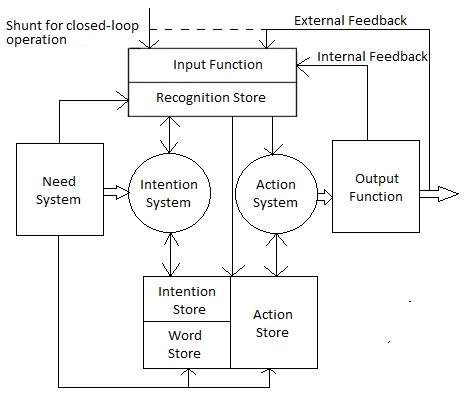
- Memory System.
- Intention Store.
- Acts as a kind of temporal extension to the Intention
System.
- Its contents are limited, short-lived, and subject to
loss
or interference.
- Action Store.
- Recognition Store.
- Word Store.
- Intention System- it organizes plans of future action, to
monitor and guide ongoing activity, to cope with changing
circumstances, to review past actions, and to recover errors when they
occur.
- It has limited capacity. Only one plan can be maximally
active within this system at any moment.
- It is always busy, at least during waking hours.
Source: Absent-minded?:
The Psychology of Mental Lapses and Everyday Errors (1982)
by J. T. Reason and Klara Mycielska.